Fur coats are exquisite pieces of art, especially mink coats. They have been worn for so many years and they are always in fashion. Have you ever wondered how these beautiful mink coats are made? There are many steps until a mink coat can be worn. Below, we will present the steps for the mink coat production.
1. Fur Farms
Minks are the most commonly farmed furbearers while smaller quantities of fox and chinchilla are also produced on small, family-run farms. Farmed mink, are fed leftovers from our own food production. The manure, bedding (soiled straw and wood shavings), and carcasses are composted to produce organic fertilizers to replenish the soil. Nothing is wasted.
Although their ancestors were originally taken from the wild, these animals have been selectively bred and raised on farms for many generations. Mink have been farmed for over 150 years. When minks get full grown they were euthanized in a humanly and not cruel way and then the farmers take out their fur! There is a myth that the animals are alive when they are skinned but this is not true at all! In the EU, USA, and CA, all farms must follow some strict regulations. These regulations are about animal welfare, health, and respect!
2. Auctions
Public auctions are the principal method of selling raw (unprocessed) pelts to international buyers. This continues an age-old tradition. That is the price level for each fur type is determined by market supply and demand. Trappers and farmers receive the full value paid for their furs, minus a small commission charged by the auction house. This commission is to cover the costs of promotion, organizing the sale, and other market-development activities.
Trappers and farmers deliver their furs to the auction house on a consignment basis. Each pelt is identified with a bar-coded computer tag so that the producers can receive the price paid for their furs, even when they have been inter-sorted with others. When the sale is finished, the auction house deducts a small commission to cover the cost of receiving, grading, and selling the fur and remits the rest directly to each trapper and farmer.

3. Production
Fur processing, like the production of any textile or other material, consumes energy and must be done responsibly to protect the environment and human health. Fur processing is carefully regulated and, in any case, processes must be benign enough to protect the fur.
The first step in processing raw pelts is dressing. The dressing of furs involves several steps, the exact number of which is determined by the particular fur being dressed. Generally speaking, fur is cleaned, softened, fleshed (extraneous flesh is removed), and stretched. The skin is tanned by a process called leathering. Many furs are then dyed, bleached, or tipped (dyeing the guard hair only) using various synthetic compounds called fur bases.

4. Design
The design process begins with sketches, notes, patterns, and muslin models. Pelts must be matched for size, color, and texture because furs are a natural product, no two pelts are exactly alike, that’s why fur is so difficult to work with! Each pelt is unique and varies in the thickness of skin, fur density, natural color, and size. The genius of master furriers is their special ability to match and assemble these fur pelts to create a homogenous fabric-like material, while skillfully using the natural character of the skins to enhance the design of each garment.
One of the most important and unique aspects of fur design is the process of letting out. This process involves a steady and precise hand cutting the fur into tiny diagonal stripes that are re-sewn to make the pelt longer, narrower, and more supple.
The pelts are then trimmed and blocked: cut, moistened, and stretched to fit the pattern, and “nailed” to the blocking board to dry in the proper shape. When dry, the pieces are sewn together, closed, and finished, sometimes with the addition of other luxury details. Such as printed silk linings or Swarovski crystals, the culmination of as much as 100 hours of meticulous craftsmanship. Each garment is individually cut and sewn, by hand, in small workshops, with the special attention to detail one gives to a unique piece of art.
From a creative standpoint, fur designs have moved far beyond the traditional knee-length brown mink coat. Today, there are myriad techniques to enhance the furs, innovative dressing, dyeing, and texturizing procedures now inspire the designer and allow for the creative process to begin even before the style has been conceived.
New tanning, leathering, plucking, dyeing, shearing, sculpting, laser cutting, printing, knitting, and intarsia techniques, among many others, have metamorphosed fur garments into warm, practical, and stylish fashion pieces that adapt to any type of wardrobe.
In an age of mass-produced and disposable fashion, fur garments are a long-lasting investment. They can be restyled, resold as vintage wear, or passed down to the next generation. Fur apparel is painstakingly crafted, handmade, natural, and truly unique.
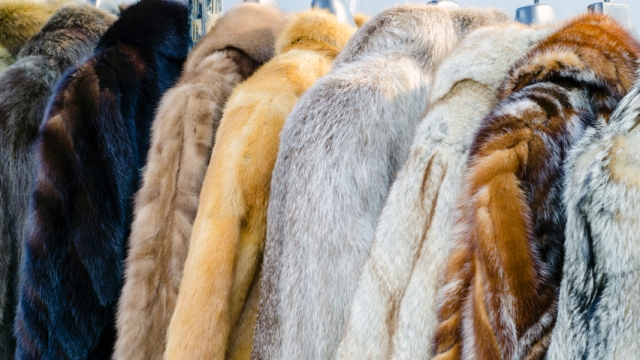
5. Buying a fur
Some retail furriers still make mink coats themselves. More often, they now have them made by specialized wholesale designers and craftspeople who work only for retailers. In North America, most fur design and fabrication is centered in New York, Montreal, and Toronto. Fur apparel and accessories are also imported from the fashion centers of Europe (e.g., Milan and Paris) or, increasingly, like other apparel, from Asia. Also, Greece has a huge production, especially in Kastoria (a small city in North Greece).
There used to be like 500 furriers, 95% of the production was made for Russian clients and retailers!
Nonetheless, most retail furriers have still experienced artisans in their own right; they are fully qualified to make repairs or alterations, or even to fully re-style (“remodel”) your fur coat, jacket, or accessory.
More often than not, retail furrier’s specialized knowledge and skills have been passed down in his or her family for generations.
Final Thoughts on What Makes a Mink Coat Truly Unique
From fur farms and international auctions to master craftsmanship and final retail, the journey of a mink coat is a story of tradition, skill, and meticulous attention to detail. Each stage reflects why mink remains one of the most prized materials in luxury fashion—valued not only for its beauty, but for its durability and timeless appeal. If you’re inspired by the artistry behind these exceptional garments and considering an investment of your own, explore our curated collection of Real Fur Coats and discover pieces crafted to stand the test of time.
FAQ for the Mink Coat Making Process
1. How long does it take to make a mink coat?
The production of a mink coat can take anywhere from several weeks to a few months. While the technical processing of the pelts may take a limited amount of time, the design, matching of pelts, letting-out process, sewing, lining, and finishing can require up to 100 hours of detailed hand craftsmanship, depending on the complexity of the garment.
2. Why is each mink coat considered unique?
Every mink pelt is a natural material and differs in size, color, density, and texture. Master furriers carefully match these pelts by hand to create a uniform final look. This natural variation, combined with handcrafted assembly, makes every mink fur coat truly one of a kind.
3. What is the “letting-out” process in fur production?
Letting-out is a specialized furrier technique where the pelt is cut into fine diagonal strips and re-sewn to create a longer, slimmer, and more flexible garment. This process allows for elegant silhouettes and is one of the defining elements of high-quality real fur coat craftsmanship.
4. Where are most mink coats produced today?
Modern mink coat production takes place in several global fashion hubs, including New York, Montreal, Toronto, Milan, Paris, and Greece (especially Kastoria). While some retail furriers still produce garments in-house, many rely on specialized workshops with generations of expertise.
5. Are mink coats handmade or machine-produced?
Although certain preparatory stages use industrial equipment, the most critical steps—such as pelt matching, cutting, sewing, letting-out, and finishing—are still done entirely by hand by skilled artisans. This is what gives a luxury mink coat its precision, durability, and artistic value.
6. Why are mink coats considered a long-term investment?
A well-made mink coat can last for decades when properly cared for. Unlike fast fashion, real fur garments can be restyled, resold as vintage, or passed down through generations, maintaining both aesthetic and monetary value over time.
7. What determines the quality of a mink coat?
The quality of a mink coat depends on several factors, including the origin of the pelts, the tanning and dressing process, the precision of pelt matching, the craftsmanship during sewing, and the quality of the lining and finishing details.
If you are planning to buy a mink coat you have to be sure so you will make the right choice! You can take some pieces of advice from our guide 6 things to know before you buy a mink coat
Sources:
https://www.truthaboutfur.com
https://www.britannica.com