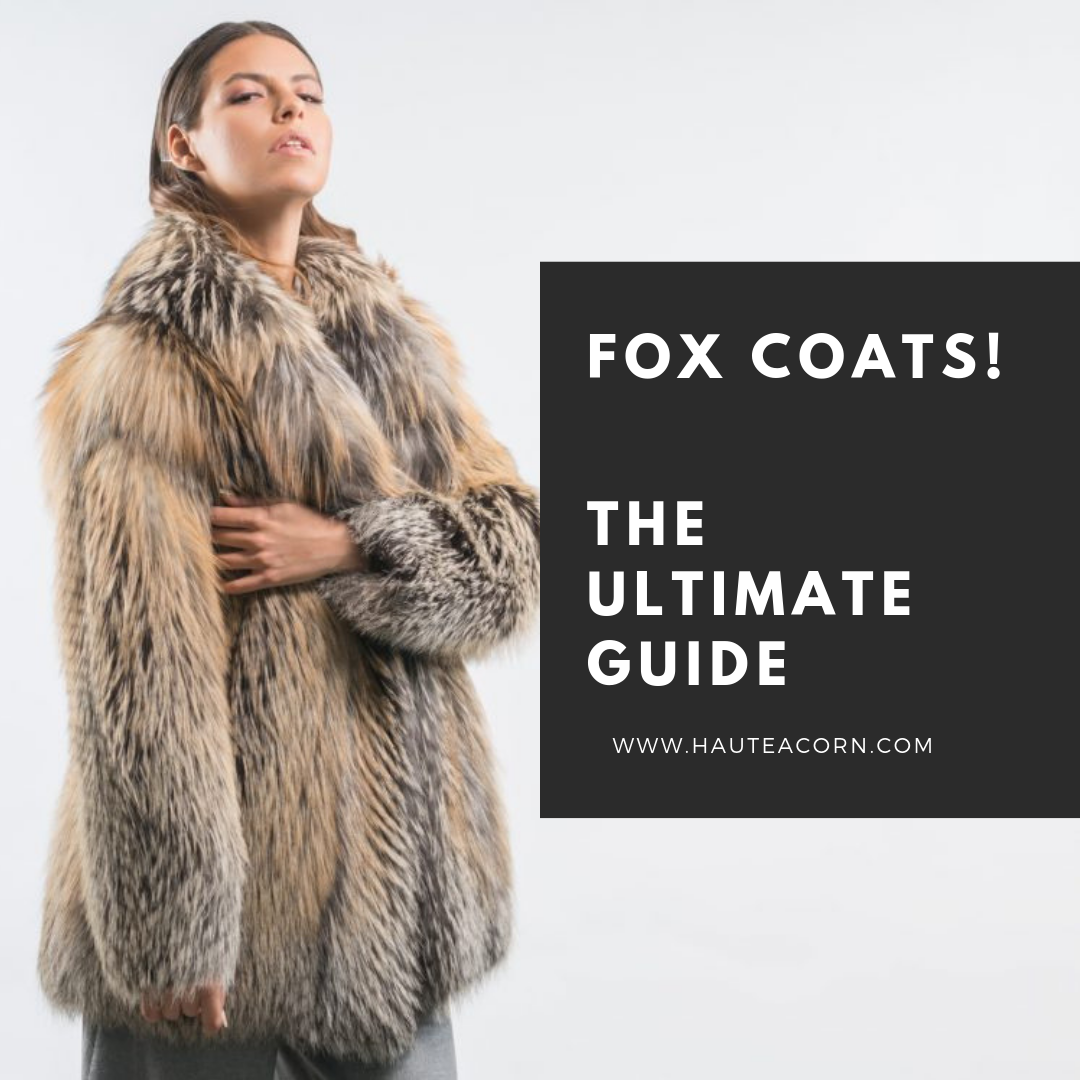
Fox fur coats are made to give you an eye-catching look but also keep your outfit elegant and classy! If you think that it is about time to have one in your position there are some things you should know so you can make the right choice!
Type of Fox fur
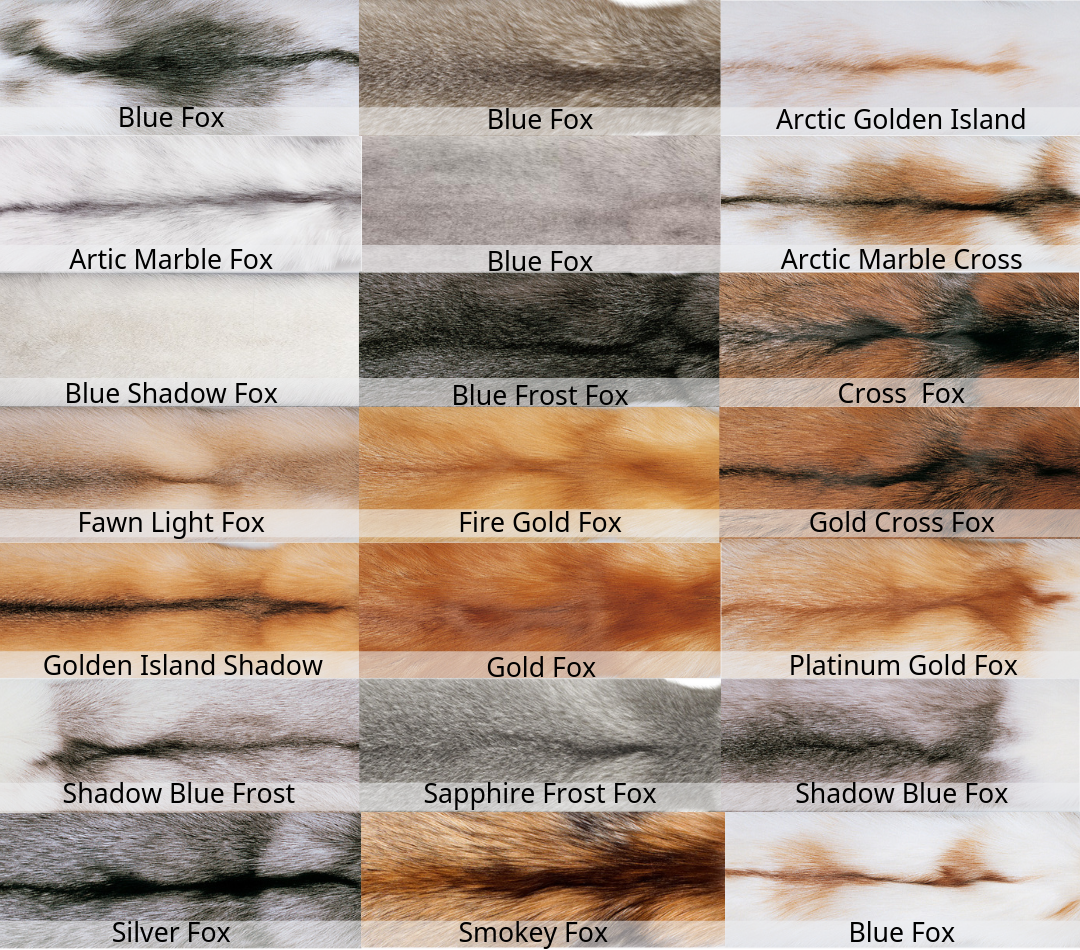
The Fox fur industry offers a great variety of natural fox pelts! The largest market for fox pelts is the SAGA fur auction in Finland, there you can find the finest selection of superior furs from strictly regulated European sources.
The Blue Fox is the most common type of fox and is considered the core of fox pelt production in the fur industry. Bellow, you can see all kinds of fox fur pelts that are used in the fur industry!
Quality of Fox Fur Coats
There are many qualities of fox fur coats and because of their fluffy composition, it’s easy to misjudge a coat. To check the quality of a fox coat, you need first to search for the labels of pelts origin (Saga, Kopenhagen, Nafa) or manufacture country.
Another way to check the quality of the fox coat is to touch the fur and feel the real material, here you should have in mind that the softness and composition of the fur vary from type to type of fox, for example, Blue Fox fur is softer and shorter than Silver Fox that is long hair fur and not so soft.
To make a high-quality fox coat the manufacturer uses the best parts of a whole fox pelt. It is also common to make fox coats with smaller pieces that are left out from previous coats. These pelts are usually lower quality and have a different effect!
Understanding Shedding in Fox Fur Coats
It is very common for a fox fur coat to shed! Especially when the coat is new it will shed, it’s impossible not to, the shed is temporary and after some time that you will wear it, it will stop shedding. Here we should notice that the shed is normal and never too much, so don’t worry at all.
A piece of good advice for the first 2-3 times you will wear it is to shake the coat outside your house before the use.
Fox Fur Coat Prices: What Affects the Cost
Usually, fox fur coats are cheaper than mink coats. This is because to make a mink coat it needed about 30-35 pelts, on the other hand for a fox coat it needed 4-8 pelts. Another reason is that mink coats require a higher technique level.
The price depends on the fur quality and fur type. For example, the Shadow Blue Fox and the Silver fox pelts are in general more expensive than the Blue Fox pelts. So it is normal if a coat is made of Shadow Blue Fox to be more expensive.
The quality also affects price, fox coats that are made of Chinese fox pelts are cheaper than EU fox coats. Also as we explained before some coats are made with pieces of fur that were left out from the previous production, these coats are much cheaper than the ones made of whole pelts.
The price of a fox coat can start from 700 USD and reach 2000 USD!
Fox Fur Composition: Understanding Its Three Hair Layers
Fox fur may consist of three layers, each with a different type of hair.
Down hair
Down hair (also known as underfur) is the bottom or inner layer. Composed of wavy or curly hairs with no straight portions or sharp points. Down hairs, which are also flat, tend to be the shortest and most numerous in the coat. Thermoregulation is the principal function of the down hair, which insulates a layer of dry air next to the skin.
Awn hair
The awn hair can be thought of as a hybrid, bridging the gap between the distinctly different characteristics of down and guard hairs. Awn hairs begin their growth much like guard hairs, but less than halfway to their full length. Awn hairs start to grow thin and wavy like down hair. The proximal part of the awn hair assists in thermoregulation (like the down hair), whereas the distal part can shed water (like the guard hair)
Guard hair
Guard hair is the top or outer layer of the coat. Those hairs are longer, generally coarser, and have nearly straight shafts that protrude through the layer of softer down hair.
Leather Parts in Fox Fur Coats: Purpose & Benefits
Nowadays, most fox fur coats are made with leather parts sewed between the fur layers. The point of this technique is to make the coat less puffy and more elegant. Fox fur coats in past decades used to be very fluffy and that was ok. Now the fashion trends are different so people demand more daintily and less fluffy, fox coats.
Final Thoughts on Choosing the Right Fox Fur Coat
A fox fur coat is more than a winter garment, it’s a statement piece that blends luxury, warmth, and timeless style. By understanding the different fox fur types, recognizing true quality, knowing what shedding is normal, and becoming familiar with the factors that influence pricing and construction, you can make a confident and well-informed decision. From the three-layer composition of the fur to the modern use of leather inserts for a sleeker silhouette, every detail plays a role in the final look and feel of your coat.
Whether you’re drawn to the softness of Blue Fox, the striking elegance of Silver Fox, or the refined craftsmanship behind high-quality pelts, taking the time to learn these essentials ensures that your investment will reward you with beauty, comfort, and durability for years to come.
If you’d like to explore more styles, comparisons, or discover a wider selection of premium designs, feel free to browse our full collection of real fur coats and find the piece that truly matches your taste.
FAQ for Ultimate Guide on Fox Fur Coats
1. How do I clean and properly store a fox fur coat?
Fox fur requires professional cleaning—never machine wash or dry clean it with regular cleaners. For storage, the coat should be kept in a cool, dark, breathable environment, ideally using a cloth garment bag. During summer, professional cold storage is recommended to maintain softness and prevent drying.
2. How can I tell if a fox fur coat is real or fake?
You can check authenticity by inspecting the base of the fur (real fur has leather backing, faux has fabric), feeling the texture (real fox fur is soft with varied hair lengths), and gently blowing on it to observe movement. Faux fur often feels uniform and lacks natural guard hairs.
3. Are fox fur coats durable for long-term use?
Yes, high-quality fox fur coats can last 15–20 years or more with proper care. Durability depends on pelt quality, correct storage, and avoiding friction-heavy areas that may cause wear (like shoulder bags rubbing against the coat).
4. What is the history of fox fur in modern fashion?
Fox fur rose to popularity in the early 20th century and became a symbol of glamour in Hollywood’s Golden Age. Different fox varieties became fashion staples in various decades—from Silver Fox in the 1920s to Arctic and Blue Fox in the 1980s luxury market.
5. Is a fox fur coat a good long-term investment?
A high-quality fox fur coat can be a solid investment, especially if made from premium pelts like Silver Fox or Shadow Blue Fox. Factors that affect long-term value include craftsmanship, brand reputation, rarity of the pelt, and the condition in which the coat is maintained.
6. What should I do with an old or inherited fox fur coat?
You can keep it as a vintage piece, have it remodeled into a more modern style, turn it into accessories (such as hats or scarves), or sell it to vintage fur buyers. Professional furriers can evaluate and advise on the condition and best next steps.
7. What’s the difference between full-pelt and pieced fox fur coats?
Full-pelt fox coats use whole pelts for a more luxurious, uniform appearance. Pieced coats are made from smaller leftover pieces, making them more affordable but often less durable and visually consistent. Buyers should check labeling and construction before purchasing.